Key Takeaways
- Spouse caregiver burnout often shows up as ongoing exhaustion, emotional stress, and changes in your daily routine.
- Regular breaks, family help, short-term respite stays, and caregiver support groups give you room to rest and recharge.
- Growing care needs, safety concerns, and changes in your own health are signs it’s time to explore memory care.
- Memory care offers daily assistance, structured routines, and activities designed for people living with dementia.
- Moving your spouse into memory care lets you stay closely involved in their life without managing every care responsibility yourself.
When Spouse Care Starts to Wear You Down
Deciding when to move your spouse into memory care is rarely straightforward. You may have spent years caring for them at home, adjusting your routines as their needs changed. As those needs grow, though, there comes a point where providing care on your own can take a toll on both your health and your spouse’s well-being.
It’s time to consider memory care when your spouse’s daily needs go beyond what you can safely manage at home, or when caregiving starts affecting your own health. Caregiver burnout deserves real attention, because it can touch every part of your life. Spotting the early signs and learning what memory care looks like can help you make a thoughtful decision about your spouse’s future care.
Signs of Spouse Caregiver Burnout
When you’re responsible for your spouse’s daily care, it’s easy to overlook changes in your own health. You might have trouble sleeping, feel frustrated more often, or struggle to find time for activities you once enjoyed together. These changes tend to build gradually, especially as your spouse begins needing more help throughout the day.
Some common signs of spouse caregiver burnout include:
- Feeling tired even after a full night’s sleep
- Becoming frustrated or irritable during everyday caregiving tasks
- Missing medical appointments or putting off your own healthcare
- Spending less time with friends, family, and personal interests
- Having a hard time concentrating or making everyday decisions
- Feeling anxious whenever you leave your spouse alone
If these feelings have become part of your regular routine, it’s a good moment to look at how much you’re managing on your own.
Ways to Manage Caregiver Burnout
You don’t have to manage every part of your spouse’s care alone. Asking relatives to pitch in or arranging regular breaks gives you time to attend appointments, catch up with friends, and care for yourself. Start by identifying which tasks take the most time and where someone else can step in.
Whenever possible, it helps to:
- Ask relatives to handle groceries, household chores, or prescription pickups.
- Arrange for someone you trust to stay with your spouse while you take a break.
- Look into a short-term respite stay, which gives your spouse a furnished suite, daily meals, and help with personal care for a few days or a few weeks while you rest.
- Join a caregiver support group in Dallas to connect with people who understand your situation.
- Set aside regular time for your own medical appointments and physical activity.
- Talk with your spouse’s healthcare provider about changes in their care needs.
You don’t need to make every change at once. Start with the responsibilities that wear you out the most and ask for specific help. If you’re still finding it hard to keep up with extra support in place, it may be time to look at whether your spouse would benefit from more consistent daily care.

When to Consider Memory Care for Your Spouse
There’s no single moment when every couple needs to consider memory care. What matters is whether you can keep meeting your spouse’s needs while protecting their safety and your own health. Pay attention to how your daily responsibilities have changed.
Everyday Tasks Require More of Your Time
Helping your spouse get dressed or reminding them to take medication may once have been simple parts of your day. Now, getting through breakfast or getting ready in the morning might take hours. As your spouse needs more hands-on attention, you have less time for your own responsibilities. Memory care provides personalized daily assistance, so you don’t have to handle everything alone.
You’re Constantly Worried About Their Safety
It’s hard to relax when you’re worried about your spouse wandering outside, falling, or leaving the stove on. You may find yourself checking on them through the night or skipping errands because you’re uneasy leaving them alone. Carrying that responsibility around the clock is a lot for one person. Memory care offers a secure setting with dementia-trained care associates available 24/7.
Your Own Health Is Taking a Back Seat
When was the last time you had a full day to focus on yourself? If you’re regularly missing appointments, losing sleep, or skipping activities you love, caregiving has started shaping your quality of life. With memory care, you can step back into the role of partner without carrying every daily task yourself.
How Memory Care Supports Both Spouses
Memory care gives your spouse the daily support they need, which frees up more time for your relationship. With a trained care team handling everyday tasks, your visits can center on each other instead of on managing every detail of their care.
Memory care supports you and your spouse through:
- Hands-on help with bathing, dressing, grooming, and other daily tasks
- Familiar routines that bring structure and comfort to each day
- A secure neighborhood with care associates available around the clock
- Sensory, memory recall, and cognitive stimulation activities that match your spouse’s abilities
- Time together over meals, visits, and the interests you’ve always shared
You can still play an active role in your spouse’s care and enjoy the things you’ve always loved doing together. With a dedicated team by your side, you no longer have to carry every responsibility on your own.
Explore Memory Care at Parsons House Preston Hollow
Caregiver burnout is a signal that your own needs deserve attention, too. When your partner needs more help than you can comfortably give, memory care offers a way to meet their daily needs while protecting your well-being. At Parsons House Preston Hollow in Dallas, our memory care neighborhood combines personalized assistance with engaging activities in a calm, welcoming setting.
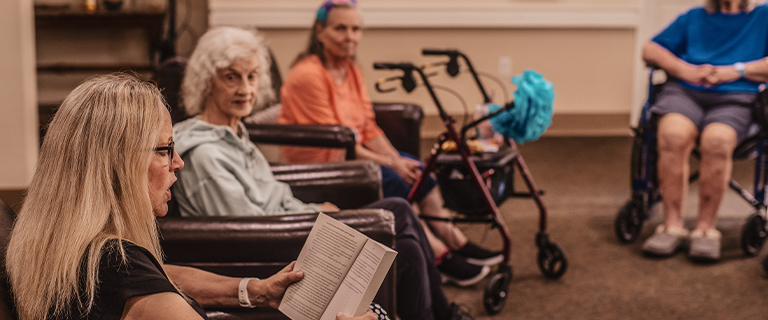
Our single-story memory care neighborhood features keypad-secured entries, a dementia-trained team on hand 24/7, and an enclosed memory garden and patio where residents can enjoy fresh air safely. Meals are served in an intimate, family-style dining room, and you’re always welcome to join your spouse at the table. You can explore all our senior living services to see how we support residents each day.
Our team understands how meaningful your relationship is, and we’re happy to answer your questions about your spouse’s care and what daily life here looks like. Request a tour and come see how our community can support you both.